Choosing a membership CRM
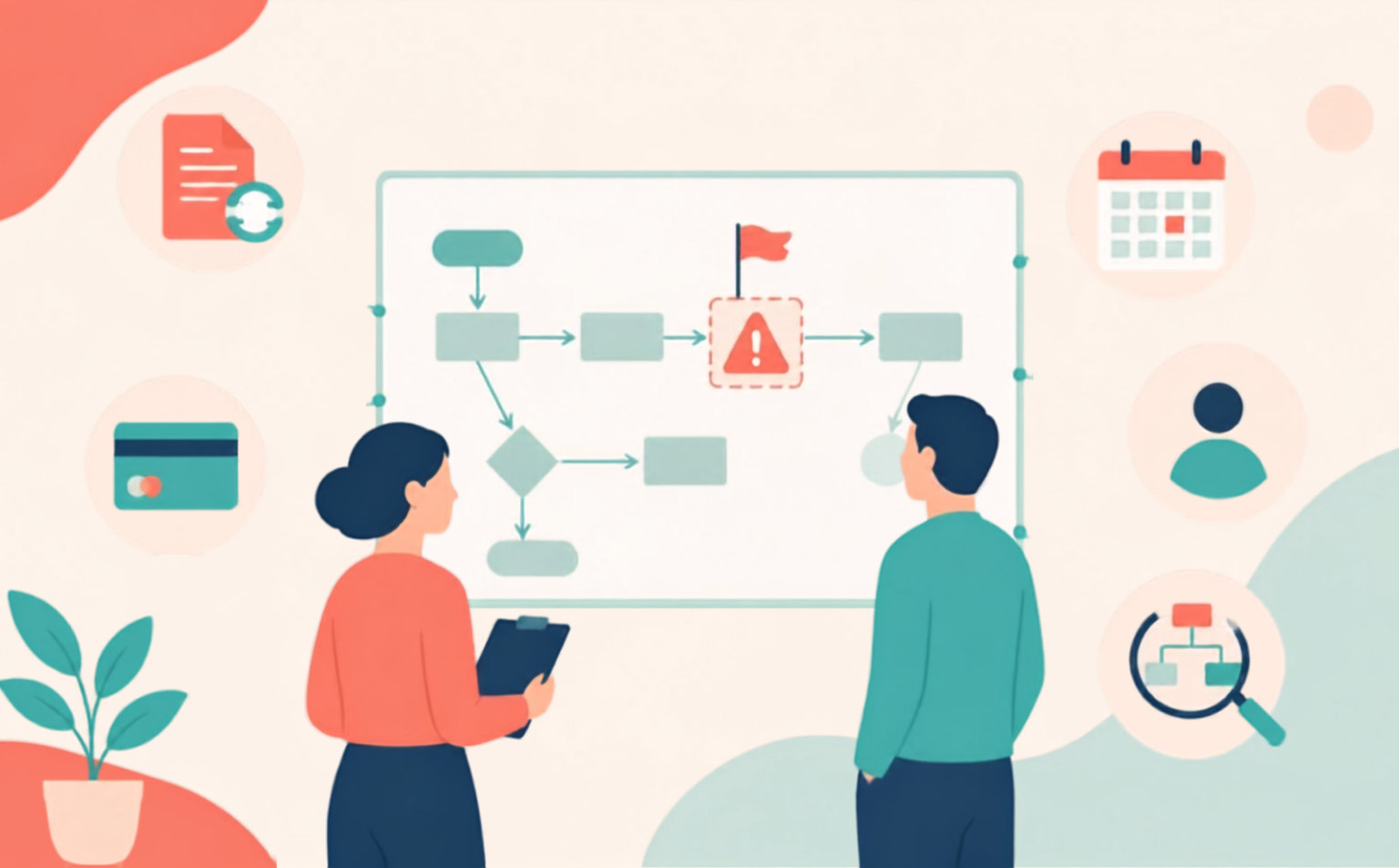
Image generated by AI
The features that really matter
Some CRM buying processes may start in the wrong place. Membership teams might open comparison sites, look at feature grids and begin asking whether one CRM has more automation, more integrations or a better-looking dashboard than another. But a long list of features tells you very little about whether the system will solve the issues your team deals with every day.
A better starting point is the common challenges your membership team faces day to day:
Where is staff time being lost?
Which processes are unreliable?
Where do members experience delays, confusion or unnecessary friction?
These sorts of questions turn the CRM decision into an operational one rather than a software shopping exercise. This blog has been written for membership organisations at an early stage of thinking, before the requirements list is drawn up and before any supplier is on the shortlist.
Start with your operational problems, not the feature list
This distinction matters because it changes what a membership CRM decision is actually about.
The 2026 Membership Marketing Benchmarking Report found that 37% of associations see insufficient staff resources as a barrier to member engagement, while 70% say members themselves are short on time. Therefore, a membership CRM that adds steps, manual checking or disconnected systems is unlikely to help either side. The better system is one that reduces the work required from staff while making it easier for members to renew, register, pay and engage.
This isn't just a membership-sector observation. PMI's Pulse of the Profession research on requirements management found that nearly half of unsuccessful projects, 47%, fail to meet their goals because of inaccurate requirements management, and that poor requirements management wastes an average of 5.1% of every pound spent on a project. Teams that skip straight to comparing feature lists are, in effect, skipping the single step research shows matters most.
Before looking at solutions, we recommend mapping the work your team already does. Renewals, invoices, payment reconciliation, member enquiries, events and board reporting are the obvious places to start. For each one, look at how long it takes, how many people are involved and where the process tends to break down.
The individuals carrying out that work should also be involved from the very start. Research published by IEEE on user involvement in requirements quality found that early involvement from the people who'll actually use a system is directly linked to better requirements and better project outcomes. Membership staff know when records are incomplete, finance knows which reconciliation tasks are still manual, and event teams know which information gets entered twice.
The aim isn't to collect everyone's wish list. It's to identify the small number of problems that repeatedly cost the organisation time, money or member satisfaction. These are the problems the CRM needs to solve.
Doing this exercise usually reveals the real requirements. For example, if staff spend hours rebuilding reports in spreadsheets every month, the problem is not simply that the organisation needs "better reporting". It may be that the underlying data is fragmented, or that information can't be pulled together in one place.
Interestingly, research from the Workgeist study supports this and found that employees lose an average of 59 minutes a day hunting for information scattered across different apps and systems, and it takes roughly nine and a half minutes to get back into a productive flow after each switch between tools.
Focus on capabilities that affect member outcomes
Once the problems are clear, the feature list becomes easier to judge.
We find that the strongest membership CRMs tend to help in a few consistent areas:
Bringing member information together
Automating renewals and payments
Connecting event and engagement data
Allowing useful segmentation and producing reports people can trust.
These capabilities matter because they affect how efficiently the organisation can operate and how easily members can interact with it.
Centralised member information
Take centralised member information as an example. A membership team may technically have all the data it needs, but if contact details are stored in one system, payments in another and event attendance somewhere else, staff still have to reconstruct the member's picture manually. That slows down responses and makes it harder to see patterns.
The MGI report found that associations with higher renewal rates are more likely to track engagement through event attendance and survey participation, and those seeing improving renewal rates are more likely to monitor volunteer activity and transaction history. If engagement data is spread across several platforms and can't be viewed alongside membership status, it becomes harder to identify who's active, who's drifting away, and what action might help.
Renewals and billing
Renewal and billing automation should be judged in the same way. What matters is whether the system can reliably handle the renewal journey your organisation actually runs, scheduled reminders, failed-payment follow-up, automatic annual renewals, instalment options and clear self-service for members.
The MGI data shows that 44% of associations already offer automatic annual credit-card renewal, with bill-me and instalment payments also widely used. Billing flexibility isn't an edge case for many membership organisations, so it should be tested properly when comparing systems.
The Biochemical Society's move away from a heavily customised Salesforce instance illustrates the point. Their previous setup could technically hold membership data, but in daily use, fields populated incorrectly, direct debits failed to fire, credit card payments malfunctioned, and the sign-up process became, in Associate Director Lorraine Reese's words, "horrendous". The system had features. It couldn't reliably deliver the outcomes the team needed.
After moving to sheepCRM, payments processed cleanly and the sign-up journey worked as designed. The change wasn't that the new system had more features. It was that the features it had were built around membership operations rather than sales pipelines.
Event management
Event management deserves attention where events are a significant part of the membership offer. The value isn't simply that the CRM can create an event page, but that attendance links back to the member record. Event attendance is the most commonly tracked measure of engagement, used by 72% of associations in the MGI study. If event data sits outside the CRM, the organisation loses part of the picture it needs to understand member behaviour.
Segmentation
Segmentation is easy to overstate and easy to underuse. Most systems will claim to support it. What matters is whether staff can create useful groups without needing technical help every time, and whether those groups can be acted on inside the system rather than exported to another tool.
Personal staff contact is the most common tactic used to re-engage inactive members, and organisations with higher renewal rates are significantly more likely to use it. That kind of outreach depends on being able to find the right members quickly and route them to the right person.
Reporting
Reporting should be tested with the same discipline. A CRM dashboard is only useful if it answers the questions the organisation actually asks. Senior teams typically want to know how membership numbers are changing, which groups are renewing, where engagement is falling, and how income is moving over time.
If staff still have to export multiple reports and rebuild the answer in a spreadsheet, the CRM has reporting tools without solving the reporting problem. One respondent in the MGI study described switching database software specifically because the existing system couldn't provide the reports needed to scale a growth plan. Reporting isn't an administrative extra. It can affect the organisation's ability to understand what's happening and decide what to do next.
The MemberWise Digital Excellence Report 2026 reinforces the same point from the wider UK sector. The report names the inability to effectively measure member engagement as membership organisations' single biggest challenge for 2026, up from third place the year before.
It also found that only 14% of organisations have technology spend aligned to a documented digital strategy, and that 59% said system integration fell short of what they'd expected. The tools exist. Whether they solve the operational problem, and whether an organisation has the strategy and integration in place to use them properly, is a different question.
The cost of a CRM decision
The cost of a poor decision extends well beyond the subscription fee. Implementation involves data migration, process redesign, testing and onboarding.
Gartner advocates the concept of total cost of ownership because purchase price is a small fraction of what a system actually costs across its lifetime, once training, downtime and ongoing operation are counted. If the system doesn't fit, those costs are paid twice: once during implementation, and again when the organisation has to replace it.
That's why it should be treated as a long-term operational decision rather than a procurement exercise. A system that works well for the next five years is worth more than one that wins the demo because it has the longest list of shiny new features.
Where to start
If your organisation is at the stage of thinking about a CRM but hasn't yet drawn up requirements, the exercise above, mapping the work, the friction, the repeat failures, is the most useful preparation you can do.
In addition, our Membership CRM Health-check helps identify where your current system supports the work and where it doesn't, so you can move forward with a clearer picture. We also have our Membership CRM Project Planner which provides a framework for the steps between now and a successful go-live. Both are free and designed to help you make informed decisions before speaking to any vendor.
If you'd rather work through the operational picture with someone, a discovery call with us is a working conversation about how your membership operations are structured and what a CRM would need to do to support them.
FAQ
-
Features describe what a system can do, but outcomes describe what your team needs the system to help you achieve. Two CRMs can both claim renewal automation and produce very different results in daily use. Starting with the work rather than the feature list means the shortlist gets built around problems the organisation is actually trying to solve.
-
Skipping this step usually means the mapping happens later, during implementation, when it's more expensive to change direction. PMI's research found projects with unclear requirements are far more likely to fail to meet their goals. A short exercise with the team who does the work each day is a smaller investment than discovering the mismatch six months into a new system.
-
Finance sees the reconciliation problems. Events sees the duplicate data entry. Communications sees the segmentation gaps. Membership sees the renewal picture. Each team has a partial view of where the friction sits. Research on requirements-gathering consistently finds that projects involving the actual users of a system, not just its project owners, produce better-fitting outcomes. The full picture only appears when the perspectives are combined.
-
Ask them to walk through the real tasks your team performs, end to end, using data that resembles your own. A demonstration built around your renewal journey, your reporting requirements and your engagement segmentation will show whether the fit is good for your needs and challenges.
-
The MemberWise Digital Excellence Report 2026 names the inability to measure member engagement as the sector's biggest reported challenge for 2026, alongside findings that most organisations' technology spend isn't aligned to a documented strategy and that integration regularly falls short of expectations. That's a strong indicator that many systems in place have features on paper that don't translate into operational help.