When a lapsed member didn’t actually choose to leave
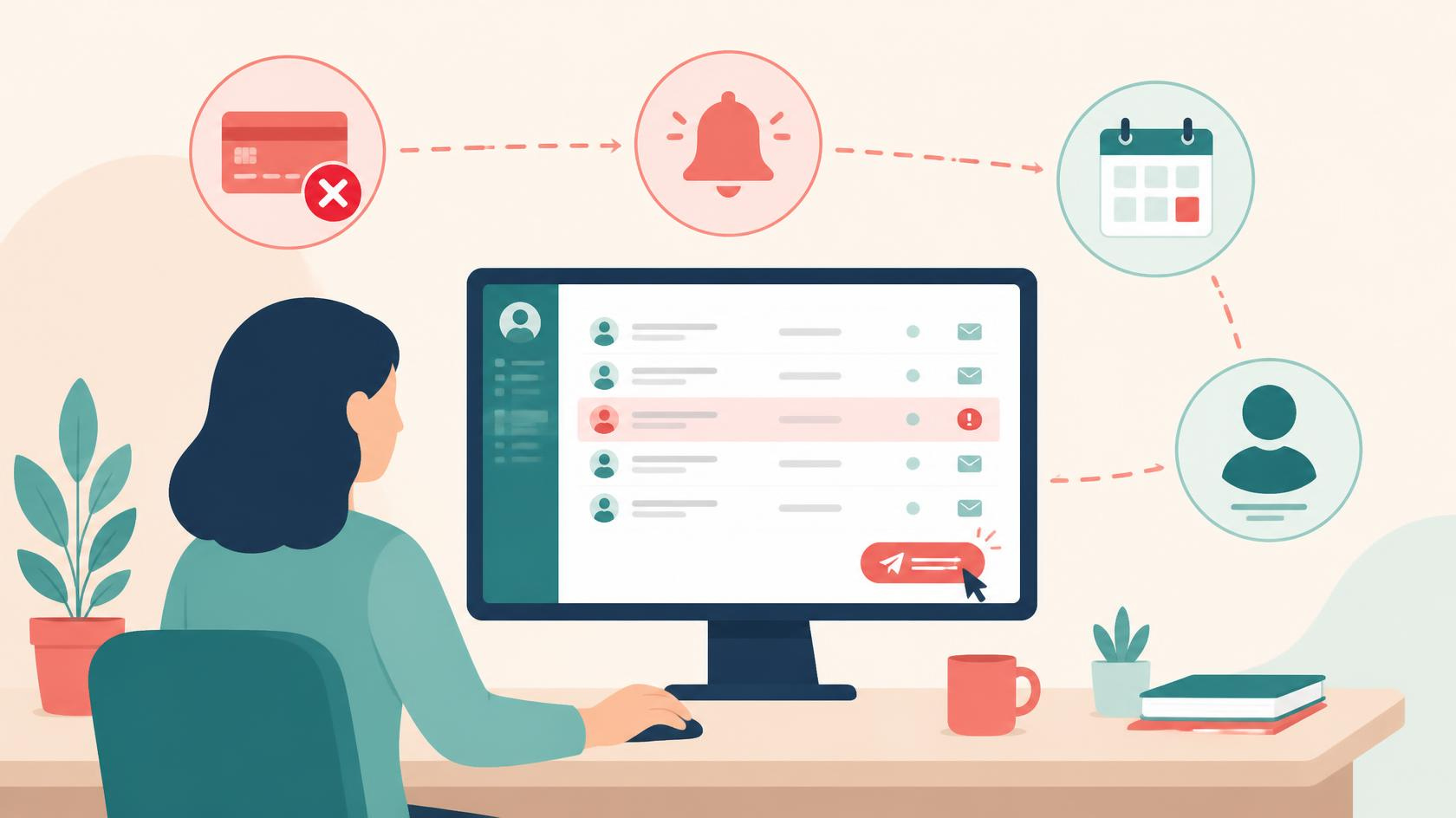
Image generated by AI
When a member doesn't renew, it's tempting to treat it as an outcome of the membership itself: perhaps they no longer saw the value, the cost felt too high, or they found what they needed elsewhere. Sometimes that's true, and when it is, it's worth taking seriously.
But according to MGI's Membership Marketing Benchmarking Report, close to a third of lapsed members, 29% overall and 36% for individual membership organisations specifically, didn't make a decision at all. They simply forgot.
The renewal email might have arrived at a busy moment, got buried, and nobody followed up before the deadline passed. That's not a value problem, it's an admin problem wearing a value problem's coat, and it's one of the more fixable things a membership organisation can address.
When a lapse isn't a decision
There are two quite different ways a member ends up lapsed without ever intending to. The first is straightforward: they simply never acted. The renewal notice went out, and nothing came back, because it got lost somewhere in a busy week.
The second is easy to miss, because it looks identical from the outside. The member did act. They meant to renew, and as far as they were concerned, they had. But their card had expired, or their Direct Debit bounced, and the payment simply failed.
MemberWise's research into UK membership organisations found that only 28% automate the process of chasing that kind of unpaid subscription.
The other 72% are still doing it by hand, which means some follow-up can easily be missed during a busy week. A member who genuinely intended to renew can then become a lapsed one, not because they chose to leave, but because nobody had the capacity to notice in time.
It's worth setting this against the reasons members genuinely do walk away, because those are worth listening to. Lack of engagement is cited by 47% of associations, and a straightforward sense that the membership isn't worth the cost by 32%. Forgetting and failed payments sit apart from both of those as they're not judgements on the membership at all.
Georgina Fulton at Elmley Nature Reserve knew this problem well before automation changed it. Their team, largely run by volunteers, had been taking payments through PayPal with nothing else connected to it. "It was just so painful," she said.
“It took a lot of time, nothing was automated, and we used PayPal to take payments. It took the volunteers a long time and didn’t necessarily have that time. It was a vastly complicated procedure. It was easy to miss things or make mistakes.”
After switching to GoCardless through sheepCRM, that changed:
“We’ve saved so much time and can now concentrate on the nature reserve and providing member benefits.”
Nothing about Elmley's members changed in that transition. What changed was whether a missed payment got caught in time, or whether it slipped through unnoticed until the membership had already lapsed.
What happens when the process follows up for you
Automation addresses these two problems differently, which is part of why it's worth treating them separately.
For a forgotten renewal, the fix is a reminder that lands and gets followed up on, rather than depending on someone remembering to send a second email. For a failed payment, the fix is a retry that happens automatically and promptly, rather than waiting for a staff member to notice a payment bounced and chase it by hand.
The type of payment matters here too. GoCardless's data, drawn from more than 55,000 customers and 52 million transactions, puts the average UK Direct Debit failure rate at around 2.9%.
For membership organisations specifically, that falls closer to 1.5%, with more than 64% of its membership-sector customers seeing a 100% success rate. Card payments fail considerably more often, typically somewhere between 10% and 15%.
What happens after a failure matters even more. A basic, unautomated retry recovers somewhere between 15% and 25% of failed payments, according to Merchant Risk Council benchmarks.
Whereas an automated retry system that times attempts based on when a payment is statistically more likely to succeed, rather than retrying blindly, recovers up to 70%, bringing the effective failure rate down to around 0.9%.
That's the difference between a failed payment being retried automatically and it becoming a lapsed membership nobody meant to lose.
There's a time cost underneath all of this too. Research commissioned by Tide via GoCardless found the average UK small organisation spends around 30 hours a month chasing late or failed payments. Separately, GoCardless reports that organisations using its automated payment collection spend around 2.6 hours a month on the same task, roughly 90% less time.
The capacity problem underneath all of this
None of this happens in a vacuum: CIPD's most recent Health and Wellbeing at Work research, based on a survey of over 1,100 UK organisations, found average staff absence has climbed to 9.4 days a year per employee, the highest level in over fifteen years, with workload and stress named as leading causes.
Separate research from Pro Bono Economics found three in ten UK charities reported a rise in staff burnout.
Some membership organisations are small teams by design. When renewal or payment chasing depends on someone remembering to do it, that process becomes vulnerable as soon as workloads increase. For some membership teams, that pressure is not occasional; it's normal.
That's really the point this whole piece is making. Automating the renewal and payment chase doesn't remove the judgement calls that genuinely need a person, deciding how to respond to a member who's disengaged, or whether a lapsed corporate membership is worth a personal call.
What it removes is the invisible failure mode: the renewal that was never actually declined, just never followed up on. Automate the predictable failure points, and the time that frees up goes to the lapses that actually need a conversation, not the ones that only needed a nudge.
Where to start
Because sheepCRM connects directly with GoCardless and Stripe, renewal reminders and payment retries happen automatically rather than depending on someone remembering to chase them, and the reconciliation happens without anyone touching a spreadsheet.
If you want to see where renewals might currently be slipping through in your own process, the Membership CRM Health-check is a useful place to start.
If you'd rather talk it through directly, a discovery call with the sheepCRM team is a straightforward way to work out what automated renewals would actually look like for your organisation.
FAQ
-
One is a decision, the other is a gap in the process. MGI's research found that close to a third of lapsed members, and over a third for individual membership organisations, cite forgetting as the reason they didn't renew, distinct from members who cite cost or a lack of engagement. Automation helps prevent those process-led lapses; it doesn't solve the underlying value question.
-
Yes, considerably. GoCardless's data puts average UK Direct Debit failure rates at around 2.9%, dropping to roughly 1.5% for membership organisations specifically, compared with 10–15% for card payments. Fewer failures mean fewer members who lapse purely because a payment didn't go through.
-
With automated retries, most failed payments are recovered without anyone needing to chase them manually. GoCardless's own data shows automated retry systems recovering up to 70% of failed payments, against 15–25% for a basic manual retry.
-
Usually, yes, and often quickly. Research commissioned by Tide via GoCardless found UK organisations without automation spend around 30 hours a month chasing late payments. Organisations using automated payment collection report spending a fraction of that. For a small or volunteer-run team, that's not a marginal saving.
-
Not if it's done well. Automating the reminder and payment chase doesn't mean removing the personal follow-up, it means making sure the personal follow-up happens for the members who actually need it, rather than being lost among the ones who simply needed a nudge.
-
It's a collaborative discussion about your needs and challenges. We explore where your current system helps or hinders you and whether sheepCRM could be a good fit. If it's not, we'll tell you early.